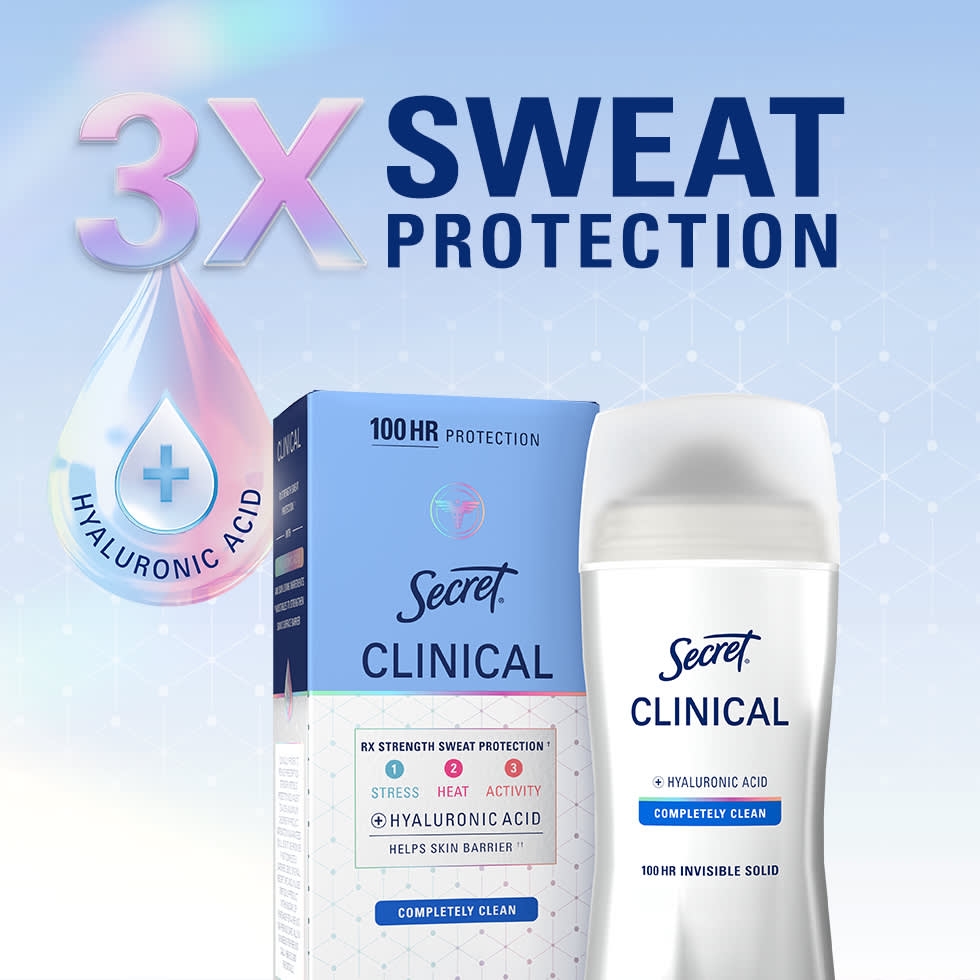
To complete antiperspirant efficacy testing—like the rigorous testing for our impressive 100 HR sweat protection claim on our recent Secret Clinical upgrade—we abide by the FDA Guidelines for Effectiveness Testing of OTC Antiperspirant Drug Products (21 CFR 350.60). This meticulous process ensures that you receive only the best of the best! Specific exclusion & inclusion criteria are determined based on the product and study intent, ensuring that every aspect of our testing is as precise as possible.
Once we identify and recruit participants, they are required to washout or refrain from antiperspirant product use for 17 days at minimum. This wait may seem challenging, but it’s a crucial step to ensure the integrity of our findings! After the washout period, we measure the sweat mass produced by each participant at baseline or without product in the underarm. Baseline sweat mass is determined by bringing each participant in for a hot room session (100°F)—yes, it’s as steamy as it sounds!—and using absorbent pads in the underarm to collect underarm sweat.
After baseline measurement, participants use the test product for several days, experiencing firsthand the transformative power of our antiperspirant. Then, they are instructed to discontinue use for a period before coming in for follow-up measurement. For our remarkable 100 HR claim, we re-measured their sweat production 100 HRs after the last time they used the antiperspirant test product. Our second sweat measurement is conducted in the same way as the baseline measurement, ensuring consistency every step of the way.
The difference in the mass of sweat collected at baseline & after treatment indicates how effectively our product reduces sweat production 100 HRs after it was used. This thorough process showcases our unwavering commitment to delivering unbeatable protection, so you can feel confident and fresh all day long!
Mini Definitions (Quick Guide)
Washout period: A set time (here, at least 17 days) when participants avoid use of a particular product, in this case, antiperspirant. A washout period helps limit prior-product carryover before baseline measurement.
Baseline sweat mass: The amount of underarm sweat collected after a washout period or without product during a standardized session, used as the starting comparison point.
Hot-room session: A controlled, warm environment (about 100°F) used to promote sweating consistently across participants.
Absorbent pads: Pads placed in the underarm to collect sweat, which is then weighed to quantify sweat mass.
Endpoint (e.g., 100 hours): The scheduled time when sweat is re-measured (for the claim, 100 hours after last application).
FAQs
What standard does this antiperspirant efficacy testing follow?
The testing is designed to align with FDA Guidelines for Effectiveness Testing of OTC Antiperspirant Drug Products (21 CFR 350.60)
Why is there a 17-day minimum washout period before baseline testing?
Participants refrain from antiperspirant use for at least 17 days to help minimize lingering effects from previous products and improve the reliability of baseline (no-product) sweat measurements.
How is baseline sweat mass measured in the underarm?
Baseline is measured during a controlled hot-room session (about 100°F), where absorbent pads placed in the underarm collect sweat that is then weighed to calculate sweat mass.
How is the “100 hour sweat protection” claim evaluated for Secret?
After using the test product for several days, participants stop use and return for a follow-up hot-room session; underarm sweat mass is re-measured 100 hours after last application of the Secret product.
Key Highlights
FDA-aligned approach: Efficacy testing is designed around FDA OTC antiperspirant effectiveness guidance (21 CFR 350.60).
Washout supports baseline accuracy: A minimum 17-day washout helps reduce prior-product carryover before no-product sweat measurement.
Objective sweat measurement: Underarm sweat is collected with pads and quantified as sweat mass for consistent comparisons.
Controlled conditions improve consistency: Baseline and follow-up use the same ~100°F hot-room method to limit variability.
100-hour endpoint comparison: The claim is evaluated by comparing baseline sweat mass vs. sweat mass 100 hours after last use of Secret Clinical.
Related Articles
Choosing Deodorant
What’s Inside? Antiperspirant and Deodorant Ingredients Demystified
Uncover the key ingredients in Secret antiperspirants and deodorants. Learn how they keep you dry, fresh, and confident.
Read more about
Odor & Sweat Protection
Why do I sweat?
Discover why you sweat and how it helps regulate your body temperature. Learn about different sweat types and debunk myths about sweat and toxins.
Read more about
Odor & Sweat Protection
What makes Secret a great option for Odor Protection?
Discover what makes Secret the best for odor protection. Learn how body odor starts, how your diet impacts it, and how Secret antiperspirants and deodorants keep you fresh.
Read more about
Odor & Sweat Protection
What makes Secret a great option for Sweat Protection?
Learn how to manage sweat effectively with Secret's top tips. Discover the best antiperspirant application techniques and lifestyle changes for optimal sweat protection.
Read more about