Authors: Daniel Custer, Annika Kline
Can an Antiperspirant Be Both Gentle and Effective?
Yes. Gentleness is determined by how the complete formula performs on skin, not solely by whether it contains aluminum. A well-designed antiperspirant can reduce sweat while remaining well tolerated when evaluated as a finished product in appropriately designed clinical testing.
Many women experience underarm sensitivity at some point in their lives – a difficult and emotional hurdle to overcome. Redness, itching, burning or discomfort may appear after shaving, during hot weather, following exercise, when clothing rubs against the skin or even after applying the wrong underarm product for your skin.
When irritation occurs, the antiperspirant is often blamed, so much so, that many assume that an aluminum-free deodorant must be gentler than an aluminum-containing antiperspirant. However, the science is more complex; involving inherent axillary skin barrier differences, unique physiological characteristics of the axilla, mechanisms of fighting sweat and odor, and individual use cases.
The underarm is already a uniquely demanding environment for skin. It is warm, humid, frequently shaved, exposed to recurring skin-on-skin friction and, is densely populated with hair follicles and sweat glands. 1
For this reason, the most informative question is not simply whether a product contains aluminum. It is whether the complete product has been shown to provide effective sweat and odor protection while remaining well tolerated on underarm skin.
Why Is Underarm Skin So Sensitive?
Underarm skin exists in a warm, humid fold that experiences repeated friction, sweat, shaving and limited ventilation. These overlapping stresses can make the area prone to discomfort regardless of which underarm product is used.
The underarm is one of the most biologically distinct regions of the body. As an intertriginous skin fold, meaning an area where two skin surfaces touch or rub against one another, it functions as a partially occluded microenvironment where opposing skin surfaces, clothing coverage, limited airflow, and dense populations of hair follicles and sweat glands work together to retain heat and moisture. 23
Unlike many exposed body sites, the axilla frequently remains closer to core body temperature. In a controlled study evaluating 1,080 temperature measurements under ambient conditions ranging from 14–32°C, mean axillary temperature measured approximately 36.7°C, while mean forehead temperature averaged 36.2°C, illustrating the relative thermal stability of the underarm environment. 2
Hair follicles further contribute to this unique physiology by increasing surface complexity, serving as anatomical channels associated with sweat and sebum delivery, and creating a region that is routinely exposed to grooming-related mechanical stress.
Additionally, the barrier function of underarm skin is generally reduced compared to other anatomical regions such as the back and forearm. This difference in barrier function can be quantified by transepidermal water loss. A primary job of the skin is to be a barrier which keeps the inside in and the outside out. Transepidermal water loss quantifies this barrier function by measuring the amount of water which is lost from your body, through the skin. In an internal study by scientists for Secret R&D, it was found that underarm skin exhibits approximately 83% higher transepidermal water loss (8.31 vs. 4.54 g/m²/h) together with 41% lower total ceramide content than back skin, indicating a comparatively weaker baseline barrier. This is consistent with other peer-reviewed studies comparing the underarm to other regions such as the forearm.
The relationship between moisture and friction is particularly important in the underarm. As water accumulates within the outermost layers of the skin, corneocytes absorb moisture and swell, causing the stratum corneum to become softer and more deformable. This increases the amount of surface area that comes into contact with adjacent skin and clothing and increases adhesive forces between those surfaces. As a result, greater frictional and shear forces are generated during normal arm movement. Over time, repeated exposure to warmth, moisture, friction, and limited ventilation can place continuous mechanical stress on the skin barrier and contribute to discomfort and irritation. This relationship is reflected in dermatologic and wound-care literature describing moisture, friction, and occlusion as recognized contributors to inflammation and barrier compromise.3-4, 24
Collectively, these anatomical and physiological characteristics help explain why the underarm is disproportionately susceptible to irritation, discomfort, and sensitivity relative to many other body sites.1, 23
While these characteristics do not mean every person will experience irritation, they do mean that underarm discomfort can have several overlapping contributors, entirely distinct from the product you choose to use.
Mechanistically, retained moisture changes how opposing surfaces interact. Water absorbed by corneocytes increases stratum-corneum swelling and compliance, allowing skin to deform over a larger contact area against adjacent skin or clothing. The larger contact area and stronger adhesive interaction increase friction and shear during arm movement. Repeated loading can then disturb superficial corneocyte cohesion and amplify discomfort, particularly after shaving or when the barrier is already compromised. Moisture is therefore not inherently damaging; its relevance arises from the combination of hydration, occlusion, movement and repeated mechanical stress.5
Objective measurements AXILLARY-BARRIER DIFFERENCES VS BACK SKIN:
Objective measurements demonstrated that underarm skin had 83% higher transepidermal water loss (TEWL) vs. back skin from internal P&G studies. These findings are consistent with other peer-reviewed literature.
How Does the Skin Barrier Protect the Underarm?
The skin barrier, or stratum corneum, consists of an organized outer layer of dead skin cells called corneocytes surrounded by lipids like ceramides. When this structure is less effective, more water can escape through the skin and the area may become more vulnerable to environmental and mechanical stress.
The skin barrier is primarily composed of the stratum corneum, the outermost layer of the epidermis, where it regulates the movement of water, ions and external substances between the body and the environment. Although only approximately 10–20 µm thick, the stratum corneum serves as the body’s principal permeability barrier, preventing excessive water loss while helping protect underlying tissues from mechanical, chemical and microbial challenges. It is formed by flattened, protein-rich corneocytes embedded within a highly organized extracellular lipid matrix.
This matrix is composed predominantly of ceramides, cholesterol and free fatty acids that self-assemble into tightly packed bilayers, creating a continuous diffusion barrier around each corneocyte. Ceramides account for approximately half of total stratum-corneum lipids by mass and are central to maintaining the ordered lipid architecture required for effective barrier function.6-9 When ceramide content or lipid organization is reduced, water can diffuse more readily through the stratum corneum, increasing transepidermal water loss.25 The same loss of lipid organization can weaken cohesion between corneocytes, reduce the skin barrier’s mechanical resilience, and increase susceptibility to repeated friction and shaving stress.
If we think of water as a proxy for general barrier permeability, this would mean that underarm skin has approximately ½ the barrier function of other anatomical regions like back skin. Additionally, lower total ceramide levels in underarm stratum corneum and a relationship between ceramide content and TEWL has been identified, providing an underarm-specific scientific foundation for the relationship between lipid composition, water flux and barrier resilience.10
AXILLARY CERAMIDE DIFFERENCES VS BACK SKIN:
LC-MS analysis found 41% lower total ceramide content in underarm skin compared with back skin among the same participant set.
What Does Skin pH Have to Do with Barrier Health?
Healthy skin is mildly acidic at the surface, with a pH range of approximately 4.0–6.0. That acidity helps regulate processes involved in forming and maintaining the skin barrier. Measuring whether a specific Secret antiperspirant formula moves underarm pH toward this range provides a direct way to connect antiperspirant chemistry with barrier-supportive conditions.
Skin-surface acidity is not simply a descriptive property; it helps regulate several biochemical processes required to build and maintain the stratum corneum. The mildly acidic environment supports enzymes, such as beta-glucocerebrosidase and phospholipases, that generate free fatty acids and process lipid precursors into the ceramides and other lipids needed for mature bilayers. It also influences the activity of proteases involved in corneodesmosome degradation and orderly desquamation. When surface pH rises, the balance between lipid processing and desquamation can shift, potentially slowing barrier recovery and weakening cohesion.11-12
Stratum-corneum lipids, natural moisturizing factors and acidic surface pH are interdependent contributors to barrier function, commonly called the acid mantle. Elevated pH can reduce the activity of lipid-processing enzymes, increase serine-protease activity and interfere with both lamellar lipid maturation and corneocyte cohesion. These effects explain how acidification supports barrier recovery in specific compromised-skin settings.13
In practical terms, an acidic surface environment can favor the enzymatic conversion and organization of barrier-lipid precursors while helping regulate the proteases that control corneocyte shedding. If pH becomes persistently elevated, lipid processing and corneodesmosome stability may be altered, which can delay recovery after disruption.
How Might Aluminum Salts Influence Underarm pH?
Aluminum antiperspirant salts interact with water through hydrolysis reactions that release hydrogen ions. This helps explain why these active systems are acidic and how an antiperspirant lowers underarm surface pH after application.
Aluminum ions have a high positive charge density and strongly polarize the water molecules coordinated around them. This polarization weakens an oxygen–hydrogen bond in coordinated water, allowing a proton to transfer to another water molecule and form hydronium. The resulting hydrolysis equilibria explain why aqueous aluminum-salt systems are acidic and how antiperspirant active chemistry contributes to a lower local surface pH after application.14
Aluminum-salt hydrolysis contributes to a lower local surface pH, creating an environment that supports acid-dependent lipid processing, organized lamellar structure and corneocyte cohesion. Together, these processes support efficient barrier recovery, moisture retention and underarm resilience.
SKIN-pH EFFECT:
Following application of Secret Soft Solid, mean underarm surface pH changed from 5.14 to 4.69 in a randomized, blinded clinical study with dermatologist supervision (internal clinical study BST2505059).
CORRESPONDING BARRIER EFFECTS:
In the same clinical study which found that Secret AP reinforces the skin’s natural acid mantle, the Secret AP (soft solid) showed no increase in irritation vs. untreated skin.
Is Sweat Harmful to Sensitive Skin?
Sweat is normal, necessary and not inherently harmful. However, for some people, particularly those with sensitive skin, prolonged moisture can increase friction and discomfort, and sweat can aggravate symptoms in certain inflammatory or hypersensitivity conditions.
Sweat is essential for thermoregulation and is not inherently harmful to the skin. Its relevance to discomfort depends on the amount of sweat, duration of sweat episodes, evaporation rate, occlusion and the condition of the underlying barrier. In a partially occluded fold like the underarm, persistent sweat can hydrate and soften the stratum corneum, increase contact surface area and friction, and prolong exposure to dissolved salts and other sweat constituents. On recently shaved or already compromised skin, these combined physical and chemical exposures may be perceived more readily as itching or discomfort. This does not mean that sweat should be characterized as a universal irritant; but rather, that retained wetness can become one component of a multifactorial stress environment.
Sweat Composition and Disease-Specific Findings
Beyond water and electrolytes, sweat contains metabolites, peptides, proteins and materials contributed by the skin surface and resident microbiota. Their concentrations vary with sweat rate, body site, and many other factors. Research in atopic dermatitis, the most common form of eczema, has identified differences in selected sweat components and linked these differences to symptoms and barrier recovery, illustrating how sweat composition can influence susceptible skin.15
MGL_1304 and IgE-Mediated Sweat Hypersensitivity
MGL_1304 is a protein secreted by the skin-associated yeast Malassezia globosa and found in human sweat. It has been identified as a major allergen involved in sweat hypersensitivity. Approximately 80% of patients with atopic dermatitis demonstrate type I hypersensitivity to sweat, and MGL_1304-specific IgE has been detected at elevated levels in patients with atopic dermatitis and cholinergic urticaria. In sensitized individuals, MGL_1304-specific IgE bound to high-affinity receptors on mast cells or basophils is cross-linked when the antigen is encountered, initiating intracellular signaling and mediator release, including histamine, that contributes to itching and hypersensitivity symptoms. The prevalence of MGL_1304 sensitization in the general population has not been well characterized.16-18
Hiroshima University researchers identified MGL_1304 as a major sweat antigen among many studied patients with atopic dermatitis, and recombinant MGL_1304 induced basophil histamine release in most patients tested.16 More recent work has evaluated MGL_1304-specific IgE as a diagnostic marker in atopic dermatitis and cholinergic urticaria.17
Could Reducing Sweat Help Support Underarm Comfort?
By reducing the amount of sweat reaching the underarm surface, an antiperspirant may reduce wetness and therefore one contributor to moisture-associated friction.
CORE MECHANISM 3: FROM SWEAT REDUCTION TO COMFORT
↓
Less persistent surface wetness and stratum-corneum overhydration
↓
Smaller contact area, and lower moisture-associated friction during movement
↓
Reduced mechanical stress and improved underarm comfort
This sequence can be characterized through complementary measurements. Sweat reduction can be paired with surface-wetness and drying-kinetics measurements; friction can be quantified under controlled movement, load and humidity; and comfort can be assessed using predefined sensory scales alongside visual irritation, TEWL and hydration. A within-person design controls for individual differences in sweat rate and baseline sensitivity, while aligned time points show how reduced wetness precedes changes in friction and comfort.
How Do Aluminum Antiperspirants Reduce Sweat?
Aluminum antiperspirant salts interact with moisture and material in the upper sweat duct to create a temporary, superficial obstruction. This limits the amount of perspiration reaching the skin surface without permanently changing the sweat gland.26
The FDA defines an antiperspirant as a topically applied drug product that reduces perspiration at the application site. OTC Monograph M019 identifies permitted aluminum-containing actives, concentrations, labeling conditions and effectiveness-testing requirements.19
Aluminum-zirconium antiperspirant actives undergo moisture-driven hydrolysis reactions that generate metal-containing oligomeric and polymeric species capable of forming highly viscous gel structures under physiologically relevant conditions. These hydrolysis products contribute to the formation of a temporary occlusive barrier which plugs the upper eccrine sweat duct, reducing the flow of sweat to the skin surface and thereby producing the antiperspirant effect. Gel formation, viscosity development, and the generation of polymeric aluminum-zirconium species have been identified as key attributes associated with antiperspirant efficacy.
By reducing sweat reaching the skin surface, aluminum-zirconium antiperspirants decrease moisture accumulation within the axillary environment. This reduction in wetness may limit prolonged skin hydration, frictional forces between opposing skin surfaces, and the transport of sweat-borne constituents to the skin surface.
FINISHED-PRODUCT EFFICACY EVALUATION:
In clinical testing of the finished formula, Secret Clinical reduced underarm perspiration by [XX%] versus [baseline/control] under [defined testing conditions] and reduced sweat at XX% greater than Carpe/Dove.
Does Aluminum-Free Automatically Mean Gentler?
No. Aluminum-free describes what a product does not contain; it does not indicate how gently the complete formula performs on skin. In controlled-dose studies, well-formulated antiperspirants can be very gentle on skin, with results comparable to untreated skin or water.
Removing aluminum does not automatically make an underarm product milder. In clinical studies run by Secret R&D, our aluminum-based antiperspirants are among the gentlest products tested. Deodorants rely on different combinations of odor-control ingredients, carrier fluids like water, structuring agents, fragrance systems and other formulation components, each of which contributes to how the finished product interacts with skin. As deodorants focus on odor and do not leverage aluminum-containing antiperspirants to reduce the amount of sweat that reaches the skin’s surface, moisture may still be present in the underarm.
A well-designed antiperspirant addresses both sides of the underarm experience. Its active reduces the amount of sweat reaching the skin surface, while the surrounding formula is engineered to support comfortable application, glide, dry-down and repeated wear. By reducing persistent wetness, an antiperspirant also lessens the moisture-driven swelling, skin-to-skin contact and friction that can contribute to underarm discomfort.
Randomized, blinded and dermatologist-supervised clinical studies with standardized application and objective measurements of skin give the strongest evidence for both gentleness and effectiveness of a product. These studies can measure visual signs of underarm irritation with objective graders alongside participant-reported sensorial experience, like itching and stinging.
In available controlled and in-use evaluations, Secret Clinical antiperspirant formulas have shown very low irritation potential, including performance comparable with untreated skin or water-treated skin in clinical testing by Secret R&D. These findings illustrate why the absence of aluminum alone is not a reliable predictor of gentleness and why a clinically evaluated antiperspirant can offer a particularly favorable balance of skin tolerability, sweat control and odor protection.
An externally conducted Safety-In-Use (SIU) study, commonly 28 to 56 days in length, evaluates how well a product is tolerated by the skin when used daily at home as directed. The primary measures of safety will be a product tolerance assessment based on dermal evaluations by a board-certified dermatologist. Participants also record product use and any perceived irritation, such as redness, dryness, itching, stinging, or burning, and return about once a week for evaluation by qualified skin specialists. At the end of the study, the dermatologist reviews the results and provides an overall assessment of the product’s skin compatibility. A few examples are shared below:
FRAGRANCE-CONTAINING FORMULA EVALUATION:
Secret’s scented Clinical products are deemed well tolerated in female participants, with no significant evidence of irritation from daily use as evaluated by a dermatologist.
ALCOHOL-CONTAINING FORMULA EVALUATION:
Secret’s whole body cooling deodorant mist, containing ethanol to impart a cooling sensation, did not demonstrate dermal, external genital, or subjective irritation from daily use in females with or without self-assessed sensitive skin that were tested in a 56-day SIU as evaluated by a dermatologist and gynecologist.
Why Does Whole-Formula Testing Matter?
Consumers do not apply aluminum salts, fragrance or emollients separately. They apply one complete product, so gentleness and efficacy must ultimately be demonstrated using the full product formula.
A finished formula is a coupled chemical and physical system rather than a collection of independent ingredients. Solvents determine how the other ingredients dissolve and are delivered; structuring agents control product hardness and transfer; emollients influence glide, friction and after-feel; and powders or volatile materials affect dry-down and residue. Changing one component can therefore alter aluminum active availability, deposition uniformity, application force, fragrance release, occlusion and direct skin contact. That is why it’s important that we evaluate both our ingredients and the full formula.
FDA antiperspirant guidance emphasizes effectiveness testing in finished-product form and notes that formulation variations can alter effectiveness.20 That principle is also relevant to tolerability: ingredient-level information cannot substitute for product-level clinical testing.
The evidence program builds progressively from ingredient chemistry to laboratory and in vitro models21, controlled human studies and sensitive-underarm or competitor comparisons. Ingredient chemistry defines biological plausibility; laboratory models identify relevant responses; controlled human studies characterize finished-formula tolerability and efficacy; and comparative studies establish relevance to the intended population and market context. Directional consistency across these levels creates a coherent scientific account of how the formula works and how that performance translates to underarm skin.
How Does Secret Evaluate Finished-Formula Gentleness?
Secret evaluates finished-formula gentleness through complementary measures of barrier performance, hydration, oxidative stress, cytokine measurement and other endpoints both in vitro and in vivo, as well as both self-perceived and grader-evaluated irritation in controlled use studies. Together, these methods show how the formula supports underarm skin and how the complete product performs under controlled conditions.
How Does Secret Clinical Support the Skin Barrier?
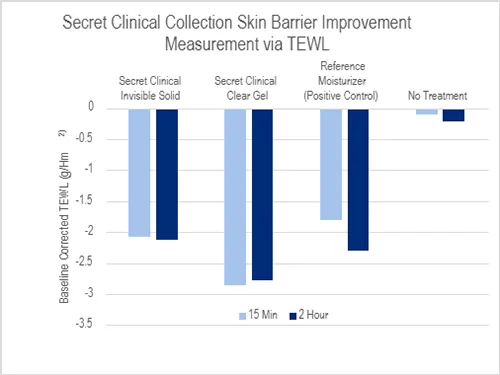
Secret Clinical supports the skin’s surface barrier through an occlusive formula system—our pro-HA technology—that includes petrolatum. By forming a protective layer at the skin surface, the formula helps limit the movement of water out of the stratum corneum, consistent with the reductions in baseline-corrected TEWL measured at 15 minutes and two hours after application.
TEWL IMPROVEMENT:
Secret Clinical Invisible Solid and Clear Gel reduced baseline-corrected TEWL at both 15 minutes and two hours after application. Invisible Solid reduced TEWL by 2.1 g/h·m² at both time points, while Clear Gel reduced TEWL by 2.9 g/h·m² at 15 minutes and 2.8 g/h·m² at two hours, demonstrating improved skin-barrier performance consistent with the occlusive layer formed by formula ingredients such as petrolatum (internal study reference BST2601053).
REFERENCE-MOISTURIZER COMPARISON:
The reference moisturizer reduced baseline-corrected TEWL by 1.8 g/h·m² at 15 minutes and 2.3 g/h·m² at two hours, while the no-treatment condition changed by only 0.1 and 0.2 g/h·m², respectively.
| Product | 15 Minutes TEWL (g/h·m²) | 2 Hours TEWL (g/h·m²) |
|---|---|---|
| Secret Clinical Invisible Solid | -2.1 | -2.1 |
| Secret Clinical Clear Gel | -2.9 | -2.8 |
| Reference Moisturizer (Positive Control) | -1.8 | -2.3 |
| No Treatment | -0.1 | -0.2 |
Figure 1 & Table 1: Baseline-corrected transepidermal water loss (TEWL) at 15 minutes and two hours after application of Secret Clinical formulas, a reference moisturizer, or no treatment.
How Does Secret Clinical Support Skin Hydration?
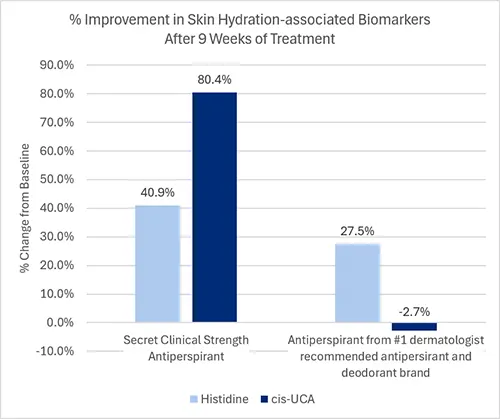
Secret Clinical also supports the skin’s natural hydration system by improving histidine and cis-urocanic acid, or cis-UCA, components associated with the skin’s natural moisturizing processes. Histidine is an amino acid present in the stratum corneum and a component of natural moisturizing factor, the mixture of water-binding substances that helps the outer skin layer attract and retain moisture. Histidine can also be converted to urocanic acid within the epidermis. Cis-UCA is a form of urocanic acid found at the skin surface that contributes to the stratum corneum’s natural moisturizing and acidic environment, helping support water retention and barrier function. After nine weeks of treatment, these hydration-related biomarkers improved significantly compared with an antiperspirant from the #1 dermatologist-recommended antiperspirant deodorant brand, reinforcing Secret Clinical’s ability to help the skin hydrate and protect itself.
DEMONSTRATED SKIN-HYDRATION:
After nine weeks of treatment, Secret Clinical increased histidine by 40.9% and cis-UCA by 80.4% from baseline. The antiperspirant from the #1 dermatologist-recommended antiperspirant/deodorant brand produced corresponding changes of +27.5% and −2.7%. These biomarker changes demonstrate Secret Clinical’s ability to support the skin’s natural hydration and protective functions (internal study reference BST2403074).
| Treatment Group | Histidine (% Change from Baseline) | cis-UCA (% Change from Baseline) |
|---|---|---|
| Secret Clinical | +40.9% | +80.4% |
| Antiperspirant from #1 Dermatologist-Recommended Antiperspirant/Deodorant Brand | +27.5% | −2.7% |
Figure 2 & Table 2: Change from baseline in histidine and cis-urocanic acid (cis-UCA) after nine weeks of treatment with Secret Clinical as compared to an antiperspirant deodorant from the #1 dermatologist recommended antiperspirant deodorant brand* *based on claims in market as of Mar. 2026.
How Does Secret’s Vitamin Package Support Underarm Skin?
Secret’s vitamin package combines antioxidant and skin-conditioning ingredients that can help protect underarm skin from reactive oxygen species, or ROS, generated through normal metabolism and environmental exposure. By helping neutralize free radicals—including ROS such as hydrogen peroxide—the package supports skin-cell integrity, moisture retention and a more resilient surface barrier.
Panthenyl Triacetate (Provitamin B5)
Panthenyl triacetate is a skin-conditioning form of provitamin B5 with antioxidant properties. By helping reduce oxidative stress within skin cells, it supports the barrier’s ability to retain moisture and function effectively. It is included in Secret Clinical Invisible Solid, Clear Gel and Soft Solid formulas, as well as Fresh Invisible Solid.
Bisabolol
Bisabolol is a chamomile-derived compound valued for its antioxidant and soothing properties. It helps neutralize free radicals while supporting a calmer, more comfortable and resilient underarm environment. It is included in Secret Clinical Invisible Solid and Soft Solid formulas.
Ginger Root Extract
Ginger root extract is a botanical antioxidant that helps combat free radicals associated with lipid and cellular oxidation. Its inclusion supports the skin’s defenses against daily environmental stressors and contributes to overall barrier resilience.
Oxidative-Stress Biomarker and Visible Skin Assessment
Secret evaluates the skin-supporting performance of its vitamin package by pairing biochemical markers of lipid oxidation on the skin surface with visible assessment of the treated skin. The 9-HODE/13-HODE ratio compares two oxidized derivatives of linoleic acid—9-hydroxyoctadecadienoic acid and 13-hydroxyoctadecadienoic acid—that are used as indicators of lipid oxidation and oxidative stress in the stratum corneum. In this assessment, a lower ratio represents a favorable change from baseline.
OXIDATIVE-STRESS FINDINGS:
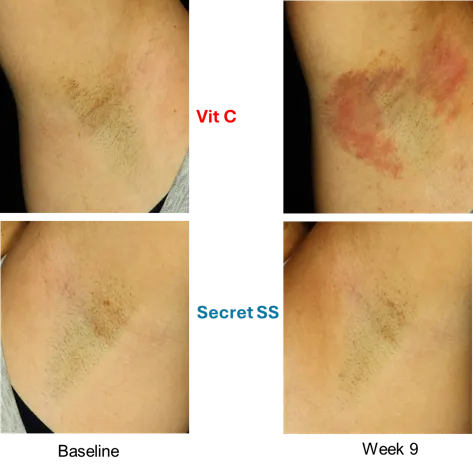
After nine weeks of use, Secret Soft Solid reduced the 9-HODE/13-HODE biomarker ratio by 23.0%, from a ratio of 46.7 at baseline to a ratio of 36.0, while the vitamin C serum comparator increased the ratio by 338.9%, from 6.7 to 29.4. Representative clinical images were consistent with the biomarker results: Secret Soft Solid-treated skin showed minimal visible change, while the vitamin C serum-treated underarm showed marked erythema and irritation at Week 9.
| 9-HODE/13-HODE Ratio Biomarker Results | |||
|---|---|---|---|
| Product | Baseline | Week 9 | Change from Baseline |
| Secret Soft Solid | 46.7 | 36.0 | -23.0% |
| Vitamin C serum | 6.7 | 29.4 | +338.9% |
Figure 3 & Table 3: 9-HODE/13-HODE oxidative-stress biomarker ratios at baseline and Week 9 for Secret Soft Solid and a vitamin C serum comparator.
In Vivo Clinical Testing
In addition to the SIU testing, in vivo evaluations by Secret R&D reinforce the gentleness seen for Secret antiperspirant deodorants. The in vivo studies referenced below used randomized, blinded designs under the supervision of an independent dermatologist.
Secret Soft Solid:
FINISHED FORMULA EVALUATION OF SENSITIVE SKIN SENSATIONS: In a randomized, blinded, dermatologist-supervised underarm study evaluating Secret Soft Solid, the product exhibited zero irritation events as determined by a threshold on an objective scale, and was not significantly different from untreated underarms in paired within-participant comparisons. It also produced mild sensory symptoms on the Sensitive Scale-10, an externally validated 10-item, patient-reported questionnaire used to measure the severity of sensitive-skin sensations on a 100-point scale (internal study reference BST2601053).
Secret Invisible Solid:
FINISHED FORMULA PATCH TESTING: In a randomized, blinded, dermatologist-supervised five-day occluded back-patch study evaluating Secret Invisible Solid antiperspirant prototype, with 0.2% sodium lauryl sulfate as the positive control and water as the negative control, the antiperspirant prototype was not statistically different from water after five days of treatment (internal study reference BST2303059).
How Does Secret Evaluate Product Effectiveness?
A common misconception is that products formulated with skin-beneficial ingredients must sacrifice antiperspirant performance. Secret’s clinical-strength performance demonstrates that this is not the case. While newer Secret innovations incorporate ingredients such as hyaluronic acid, pro-vitamin B5 and vitamins to help support underarm skin, Secret continues to leverage high-performance antiperspirant technology designed to deliver powerful sweat protection.
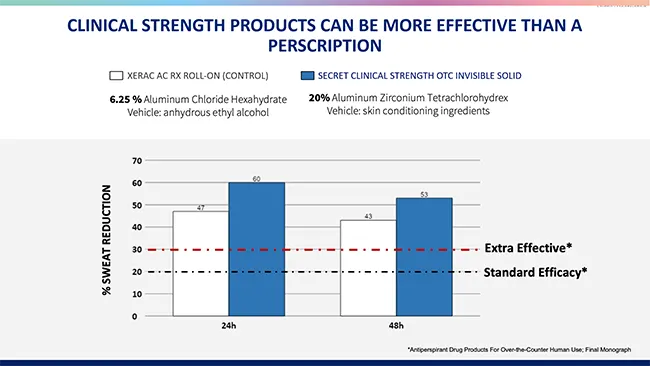
In a head-to-head comparison against Xerac AC® Prescription Roll-On, Secret Clinical Strength Invisible Solid achieved 60% sweat reduction after 24 hours and 53% after 48 hours, compared with 47% and 43%, respectively, for the prescription comparator. A separate published study likewise found that an OTC clinical-strength soft-solid antiperspirant reduced sweat at least as effectively as a prescription 6.5% aluminum chloride product—averaging 34% greater sweat-rate reduction in the comparison tests—while producing significantly less skin irritation. Together, these findings support the conclusion that a well-formulated OTC antiperspirant can deliver equivalent or greater sweat protection than a prescription comparator with a reduced irritation profile.22
Clinical Sweat Reduction Results | |||
|---|---|---|---|
Product | Active & Vehicle | 24-Hour Sweat Reduction | 48-Hour Sweat Reduction |
Secret Clinical Strength Invisible Solid | 20% Aluminum Zirconium Tetrachlorohydrex; vehicle contains skin-conditioning ingredients | 60% | 53% |
Xerac AC® Prescription Roll-On | 6.25% Aluminum Chloride Hexahydrate; anhydrous ethyl alcohol vehicle | 47% | 43% |
Figure 4 & Table 4: Clinical sweat reduction at 24 and 48 hours for Secret Clinical Strength Invisible Solid and Xerac AC® Prescription Roll-On.
The Bottom Line
Sensitive underarms are common because the underarm is a uniquely demanding skin environment. The presence or absence of aluminum alone does not determine the gentleness of an antiperspirant or deodorant. Secret antiperspirant is both highly effective and gentle on skin, as evidenced by a body of evidence across multiple in vivo studies with direct and indirect endpoints such as visual irritation grading by clinicians and biomarkers such as cytokines, which collectively indicate that wearing Secret antiperspirant is as gentle as wearing nothing at all.
Heat, humidity, friction, shaving, clothing, and retained moisture can all contribute to underarm discomfort. This challenging environment of underarm skin makes it even more important that our Secret antiperspirants are formulated to be gentle and effective.
Antiperspirants reduce the amount of perspiration reaching the skin surface. For some consumers, less wetness may also mean less moisture-driven friction and discomfort. Antiperspirant salts also reinforce the mild acidity of the stratum corneum, the acid mantle, an important element of barrier function in skin which is often compromised (elevated pH) in underarm skin.
Secret Clinical Strength Antiperspirant demonstrates, through rigorous finished-product studies, that effective sweat protection and excellent underarm tolerability can exist together.
SECRET CLINICAL’S EFFICACY AND SUITABILITY PROFILE:
In randomized, blinded, dermatologist-supervised clinical studies, Secret Clinical Strength delivered 100-hour sweat and odor protection. Additionally, Secret Clinical Strength caused no statistically significant increase in irritation versus untreated skin or water.
References
1. Urso B, Lu KB, Khachemoune A. Axillary manifestations of dermatologic diseases: a focused review. Acta Dermatovenerol Alp Pannonica Adriat. 2018;27(4):185–191. PMID: 30564831. View source
2. Chen A, Zhu J, Lin Q, Liu W. A Comparative Study of Forehead Temperature and Core Body Temperature under Varying Ambient Temperature Conditions. Int J Environ Res Public Health. 2022;19(23):15883. doi:10.3390/ijerph192315883. PMID: 36497956. View source
3. Yusuf S, Okuwa M, Shigeta Y, et al. Microclimate and development of pressure ulcers and superficial skin changes. Int Wound J. 2015;12(1):40–46. doi:10.1111/iwj.12048. PMID: 23490303. View source
4. Latimer SL, Ou SF, Huang TY, Kuruppu NR, Lee BO, Chaboyer WP. Skin microclimate as an indirect risk factor for pressure injuries: a prognostic factor systematic review and framework synthesis. J Wound Care. 2026;35(8):676–690. doi:10.12968/jowc.2024.0155. PMID: 42574331. View source
5. Sakata Y, Mayama H, Nonomura Y. Friction Dynamics of Moisturized Human Skin under Non-linear Motion. Int J Cosmet Sci. 2022;44(1):20–29. View source
6. Mao-Qiang M, Feingold KR, Thornfeldt CR, Elias PM. Optimization of Physiological Lipid Mixtures for Barrier Repair. J Invest Dermatol. 1996;106(5):1096–1101. View source
7. Menon GK, Cleary GW, Lane ME. The Structure and Function of the Stratum Corneum. Int J Pharm. 2012;435(1):3–9. View source
8. Bouwstra JA, Nădăban A, Bras W, McCabe C, Bunge A, Gooris GS. The Skin Barrier: An Extraordinary Interface with an Exceptional Lipid Organization. Prog Lipid Res. 2023;92:101252. View source
9. Feingold KR, Elias PM. The role of ceramides in the disruption of the cutaneous permeability barrier, a common manifestation of skin disorders. J Lipid Res. 2024;65(8):100593. View source
10. Haftek M, Roy DC, Liao IC. Evolution of Skin Barrier Science for Healthy and Compromised Skin. J Drugs Dermatol. 2021;20(4 Suppl):s3–s9. doi:10.36849/JDD.2021.589a. PMID: 33852254. View source
11. Schmid-Wendtner MH, Korting HC. The pH of the skin surface and its impact on the barrier function. Skin Pharmacol Physiol. 2006;19(6):296–302. doi:10.1159/000094670. PMID: 16864974. View source
12. Ali SM, Yosipovitch G. Skin pH: from basic science to basic skin care. Acta Derm Venereol. 2013;93(3):261–267. doi:10.2340/00015555-1531. PMID: 23322028. View source
13. Elias PM. Stratum Corneum Acidification: How and Why? Exp Dermatol. 2015;24(3):179–180. View source
14. Dawn A, Wireko FC, Shauchuk A, et al. Structure-Function Correlations in the Mechanism of Action of Key Antiperspirant Agents Containing Al(III) and ZAG Salts. ACS Appl Mater Interfaces. 2022;14(9):11597–11609. PMID: 35213806. View source
15. Ono E, et al. Sweat glucose and GLUT2 expression in atopic dermatitis: implication for clinical manifestation and treatment. PLoS One. 2018;13(4):e0195960. doi:10.1371/journal.pone.0195960. PMID: 29677207. View source
16. Hiragun T, et al. Fungal protein MGL_1304 in sweat is an allergen for atopic dermatitis patients. J Allergy Clin Immunol. 2013;132(3):608–615.e4. doi:10.1016/j.jaci.2013.03.047. PMID: 23726042. View source
17. Takahagi S, et al. Detection of anti-MGL_1304 IgE using the ImmunoCAP system for diagnosis of type I allergy to sweat. Allergol Int. 2025;74(2):316–324. doi:10.1016/j.alit.2024.11.004. PMID: 39732578. View source
18. Takahagi S, Tanaka A, Hide M. Sweat allergy. Allergol Int. 2018;67(4):435–441. View source
19. U.S. Food and Drug Administration. OTC Monograph M019: Antiperspirant Drug Products for Over-the-Counter Human Use. Posted November 23, 2021. View source
20. U.S. Food and Drug Administration. Guidelines for Effectiveness Testing of OTC Antiperspirant Drug Products. View source
21. OECD. Test No. 439: In Vitro Skin Irritation: Reconstructed Human Epidermis Test Method. OECD Guidelines for the Testing of Chemicals, Section 4. Paris: OECD Publishing; 2025. View source
22. Swaile DF, Elstun LT, Benzing KW. Clinical studies of sweat rate reduction by an over-the-counter soft-solid antiperspirant and comparison with a prescription antiperspirant product in male panelists. Br J Dermatol. 2012;166(Suppl 1):22–26. doi:10.1111/j.1365-2133.2011.10786.x. View source
23. Nobles T, Syed HA, Miller RA. Intertrigo. StatPearls [Internet]. Updated October 28, 2024. PMID: 30285384. View source
24. Kalra MG, Higgins KE, Kinney BS. Intertrigo and secondary skin infections. Am Fam Physician. 2014;89(7):569–573. PMID: 24695603. View source
25. Meguro S, Arai Y, Masukawa Y, Uie K, Tokimitsu I. Relationship between Covalently Bound Ceramides and Transepidermal Water Loss (TEWL). Arch Dermatol Res. 2000;292(9):463–468. View source
26. Shelley WB, Hurley HJ Jr. Studies on topical antiperspirant control of axillary hyperhidrosis. Acta Derm Venereol. 1975;55(4):241–260. doi:10.2340/0001555555241260. PMID: 52254. View source
Additional References
27. WO2009/044381. Water-in-oil emulsion stick compositions comprising aluminum and aluminum-zirconium antiperspirant salts activated using calcium ions. The Procter & Gamble Company. View source
28. Antiperspirant and Deodorant Compositions. U.S. Patent 10,568,825. The Procter & Gamble Company. View source
Related Articles
Odor & Sweat Protection
How Do Secret Clinical’s Upgrades Support Your Underarm?
Discover how Secret Clinical’s Pro-HA formulas support the skin barrier, fight oxidative stress, and provide up to 100-hour sweat and odor protection.
Read more about
Choosing Deodorant
What is the difference between an antiperspirant and a deodorant?
Learn the key differences between antiperspirants and deodorants. Find out how aluminum helps fight sweat and odor, and choose the right protection for your lifestyle.
Read more about
Whole Body Deodorant
How We Prove 100-Hour Sweat & Odor Protection
See how Secret Clinical's 100-hour sweat protection is proven through FDA-aligned testing, controlled hot-room sessions, and sweat mass measurement.
Read more about
Choosing Deodorant
What’s Inside? Antiperspirant and Deodorant Ingredients Demystified
Uncover the key ingredients in Secret antiperspirants and deodorants. Learn how they keep you dry, fresh, and confident.
Read more about